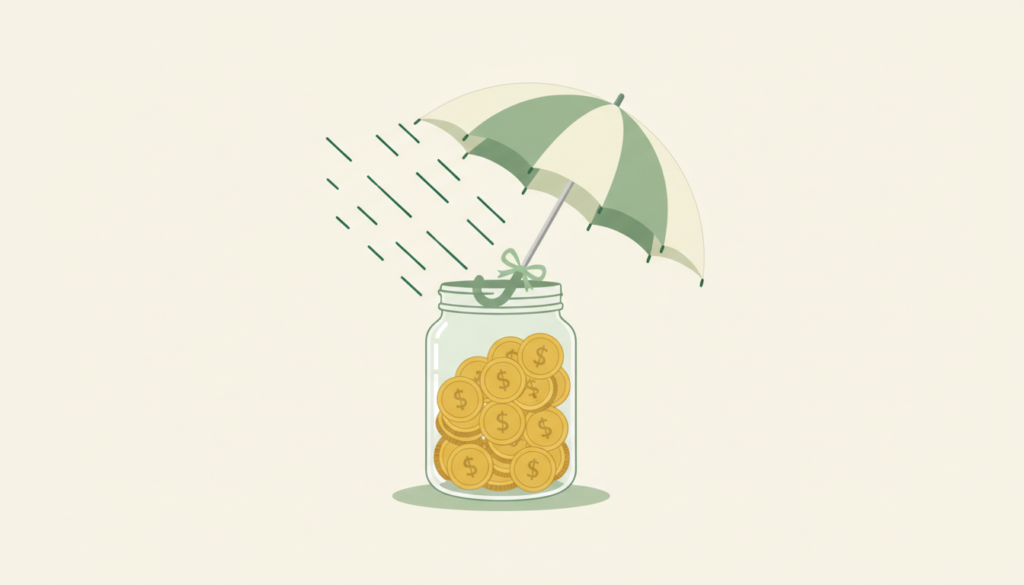
An emergency fund is money you set aside for the unexpected: a broken boiler, a car repair, a vet bill or a sudden drop in income. Without one, a single surprise expense often ends up on a credit card at a high interest rate. With one, it’s an inconvenience instead of a crisis. It isn’t the most exciting part of personal finance, but it is usually the first thing to build.
How much should you save?
The common guideline is three to six months of essential expenses. Note “essential”: rent or mortgage, utilities, food, transport, insurance and minimum debt payments, not your full spending including takeaways and holidays.
| Your situation | Suggested target |
|---|---|
| Stable salaried job, dual income, no dependants | About 3 months |
| Single income or children at home | 4–6 months |
| Freelance, commission or seasonal income | 6 months or more |
| Homeowner or older car | Lean toward the higher end |
A worked example
Say your essential costs each month are: rent 900, utilities 150, food 350, transport 120 and insurance 80. That’s 1,600 a month. A three-month fund would be 4,800; a six-month fund would be 9,600.
Those numbers can look discouraging, so break them into stages.
Build it in three stages
- Starter fund: about 1,000 (or one month’s rent). This alone covers many common surprises, like a car repair or a replacement phone.
- One month of essentials. In the example, 1,600.
- Full target: three to six months. Build this gradually alongside other goals.
If you have high-interest debt, many people reach the starter fund first, then focus on paying down the debt, then return to the full fund. The starter fund stops new emergencies from adding to the debt.
Where to keep it
An emergency fund needs to be safe and easy to reach, not invested for growth. Good options include:
- An easy-access or high-yield savings account at a regulated bank, ideally covered by your country’s deposit protection scheme.
- A separate account from your everyday current account, so you’re not tempted to spend it.
Avoid keeping it in shares or crypto: their value can fall exactly when you need the money, for example during a recession when jobs are also at risk. Long fixed-term accounts with withdrawal penalties aren’t ideal either.
Ways to find the money
- Automate it. Set a standing order on payday, even if it’s small. 50 a week adds up to 2,600 a year.
- Save windfalls. Tax refunds, bonuses and gifts can jump-start the fund.
- Cancel one or two subscriptions you rarely use and redirect the money.
- Use a budget. A simple framework helps you see where the savings can come from.
What counts as an emergency?
Ask three questions: Is it unexpected? Is it necessary? Is it urgent? A job loss, a medical bill or a burst pipe passes all three. A holiday, a sale or a new phone because the old one is slow does not. Predictable yearly costs, like car insurance or birthdays, are better handled by a separate “sinking fund” you top up monthly.
If you do use the fund, that’s what it’s for. Simply restart your automatic savings until it’s back to its target.
General information only, not financial advice. Your situation may need a different approach; consider speaking to a qualified adviser.
About the writer: Ahmed.B
Ahmed writes Tidibook’s personal finance guides: budgeting, saving and paying off debt, explained with simple worked examples.

1 comment